

AS CHINA SHAKES UP THE LFP-BASED EV BATTERY MARKET: IS INDONESIAN NICKEL STILL THE PRIMADONNA?
By: Bagus Anggraini, M.T. (KOLEKSI 908)
InfrastructureCheap Batteries from China Are Changing the Game
Take a look at the electric cars increasingly passing by on our streets. Many of them are Chinese-branded; the price starts at IDR 200 million, and most likely the battery does not use nickel [1].
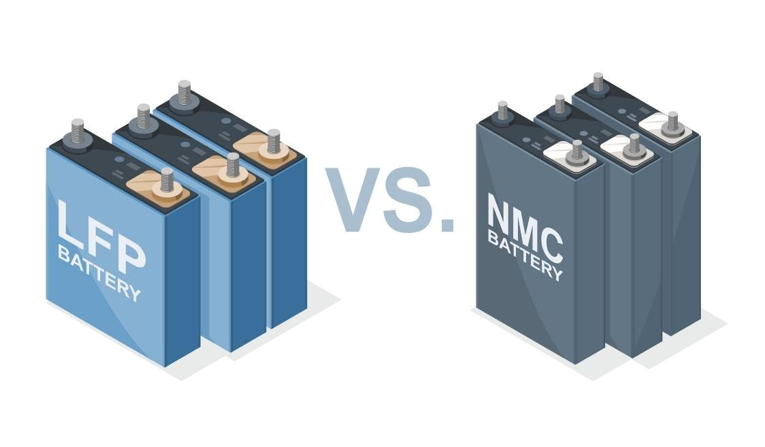
Figure 1. LFP vs NMC
The battery is called LFP (Lithium Iron Phosphate) or LiFePO4. The main materials are iron and phosphate: cheap, readily available, and more heat-resistant, making it safer. In the past, LFP was considered second-class because its "power" was inferior to nickel batteries. For example, NMC (Nickel Manganese Cobalt) batteries are powerful but expensive sports cars, while LFP is an economical, durable, pocket-friendly family car. Apparently, most people prefer the latter. Now the situation is reversed. The International Energy Agency (IEA) notes that by 2025, more than half of the world's electric car batteries will be LFP [2], with an average price 40% lower than nickel-based batteries [3]. This year, the share continues to rise [4].
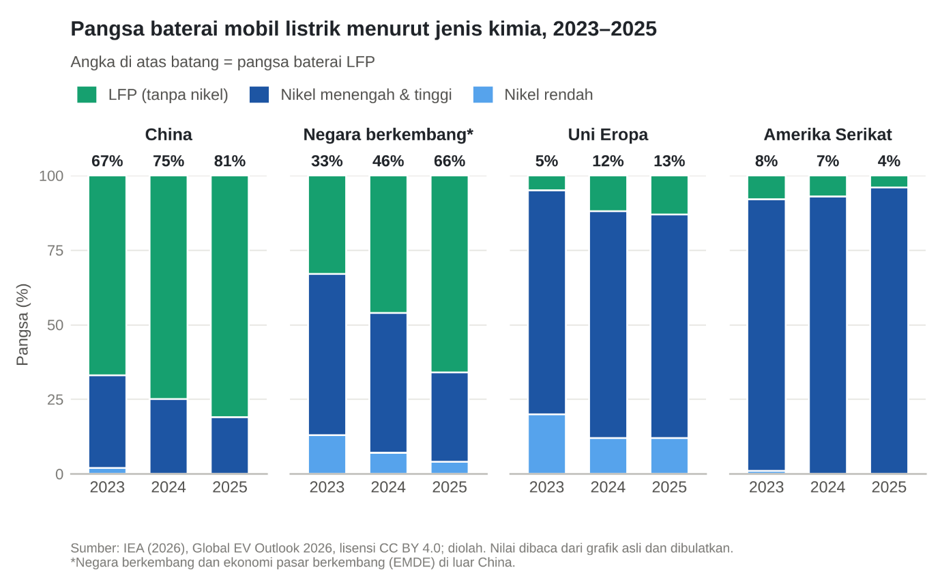
Figure 2. Electric Car Battery Share by Chemical Type, 2023-2025 [2]
Who is the king? China, which produces about 99% of the world's LFP core materials [5]. Beijing has tightened LFP technology exports since 2025 [6], even announcing a ban on battery exports, now suspended until November 10, 2026 [7]. This means one country holds the key to cheap battery technology.
Irony in the Land of Nickel
This is where the irony lies. Indonesia is the world's "nickel kingdom": about 44.5% of global nickel reserves and two-thirds of global nickel production are here [8]. For many years, nickel was predicted to be Indonesia's golden ticket in the era of electric cars.
But in our own market, lithium-iron-phosphate batteries (LFP/LiFePO4) will be used by around 96% of electric cars by 2024 [9]. Electric car sales from January to September 2026 have exceeded 117 thousand units, surpassing 2025 sales [10]. We have an abundance of nickel, but the electric cars we buy don't use it. This is not the consumer's fault. Buyers naturally choose the most affordable option, and currently the cheapest is LFP made in China.
Other challenges are also squeezed. Nickel prices were depressed due to oversupply until the government limited the 2026 mining quota [11]. Experts also warn that reserves could be depleted in about a decade if dredging continues without new exploration [12].
So, Nickel is over?
Not yet, and far from it. There are at least three reasons to remain optimistic.
First, the world is not uniform. In Europe, LFP accounts for only about 10% of the market, and in the United States, its share is declining [2]. Consumers there want cars that can travel long distances, and nickel batteries still lead. Nickel-based battery use will grow about 10% in the first half of 2026 [4], and the IEA estimates that global nickel demand will rise 65% through 2040 [13].
Second, there is a "second mine" called recycling. Used nickel-based batteries are highly valuable because the metal can be recovered, while LFP batteries have lower recycling value [14]. Europe requires new electric car batteries to contain recycled nickel starting in 2031 [15]. Countries already proficient in refining nickel, such as Indonesia, have significant start-up capital. The Indonesia Battery Corporation (IBC) has also planned a recycling plant in East Halmahera [16].
Third, Indonesia is starting to upgrade. The battery cell factory in Karawang, in collaboration with CATL and IBC, will start operating in stages in August 2026 and will be connected to the nickel mine and smelter in Halmahera [17]. We are no longer just digging; we are starting to make the "heart" of electric cars. The added value that used to go to other countries is now staying in the country, in the form of jobs, technology, and expertise.
Not Nickel or LFP, but Both
The most important lesson is that Indonesia does not need to choose one and throw away the other. Nickel for premium cars and export markets; LFP for affordable cars and electricity storage; recycling to close the cycle.
Electricity storage is a huge, often-missed opportunity. The national electricity plan (RUPTL 2025–2034) contains about 6 GW of energy storage batteries [18] to store electricity from solar panels and other renewable plants. Imagine that during the day solar panels produce an abundance of electricity; then the excess is stored in giant batteries for use at night when the lights are on. This is the key to energy security: the more clean electricity we can store, the less dependent we are on imported fuel, especially when the crisis in the Middle East again shakes the world's energy supply [19].
Regulation: The Key for Indonesia to Lead
Opportunities of this magnitude will not come by themselves. Clear rules of the game are needed.
A battery roadmap that is open to all technologies. Don't bet on just one type of battery.
Recycling obligation for manufacturers. Manufacturers and importers must take back used batteries so they don't accumulate as hazardous waste, but are recovered as industrial raw materials [16].
A "passport" of batteries. A digital record of battery origins, from mining to recycling, so the world market trusts our products [14].
Wise mining. Nickel production is regulated by reserve life, and smelters are encouraged to use clean energy.
Incentives for high-value industries. The government supports cathode and battery cell factories, not just assembly.
The shock of cheap batteries from China should not make us panic, but spur us to move smarter. Nickel may no longer be the only primadonna. With the right policies, Indonesia can become the main stage for the world's battery and electric vehicle industry while strengthening its own energy security.
References
[1] Industry.co.id (2026). This week's GIIAS 2026 recap. Available at: https://www.industry.co.id/read/153985/rekap-giias-2026-minggu-ini
[2] International Energy Agency (2026). Global EV Outlook 2026: Electric Vehicle Batteries. Paris: IEA. Available at: https://iea.org/reports/global-ev-outlook-2026/electric-vehicle-batteries
[3] CompositesWorld (2026). Composites End Markets: Batteries and Fuel Cells (2026) (summarizing the IEA Global EV Outlook 2026). Available at: https://www.compositesworld.com/articles/composites-end-markets-batteries-and-fuel-cells-2026
[4] SNE Research (August 11, 2026). From Jan to June 2026, Global EV Battery Cathode Installment Reached 1,374K tons, a 21.6% YoY Growth. Available at: https://www.sneresearch.com/en/insight/release_view/715/page/0
[5] ESS News (January 9, 2025). China proposes to cut exports of battery cathode and lithium processing technologies (citing Benchmark Mineral Intelligence). Available at: https://www.ess-news.com/2025/01/09/china-proposes-to-cut-exports-of-battery-cathode-and-lithium-processing-technologies/
[6] Project Blue (July 22, 2025). China restricts export of battery cathode material and lithium extraction technologies. Available at: https://projectblue.com/blue/news-analysis/1266/china-restricts-export-of-battery-cathode-material-and-lithium-extraction-technologies
[7] Herbert Smith Freehills Kramer (2025). China suspends export controls on lithium batteries and artificial graphite anode materials. Available at: https://www.hsfkramer.com/notes/energy/2025-posts/china-suspends-export-controls-on-lithium-batteries-and-artificial-graphite-anode-materials
[8] Guosen Securities, via Tiger Brokers (2026). Nickel Supply-Demand Dynamics Tightening, Price Floor Expected to Rise Further (USGS data-based). Available at: https://www.itiger.com/news/1161051744
[9] Katadata (June 24, 2026). The Indonesian Electric Vehicle Battery Industry Begins to Focus on the Recycling Sector. Available at: https://katadata.co.id/berita/industri/6a3baf25f25d3/industri-baterai-kendaraan-listrik-ri-mulai-fokus-ke-sektor-daur-ulang
[10] Kontan (October 12, 2026). Top 10 Best-Selling Electric Cars in Indonesia until September 2026 (Gaikindo data). Available at: https://industri.kontan.co.id/news/10-mobil-listrik-terlaris-di-indonesia-hingga-september-2026
[11] ICE Jakarta, quoted by Kontan (January 15, 2026). Indonesia sets 2026 nickel quota at 250–260 million tons. Available at: https://www.ice.it/it/news/notizie-dal-mondo/298167
[12] The Jakarta Post, via Asia News Network (October 8, 2026). Indonesia could run out of nickel within a decade. Available at: https://asianews.network/?p=306414
[13] Times of Oman (1 August 2026). Critical mineral demand to surge through 2040, supply gaps to persist: IEA (Global Critical Minerals Outlook 2026). Available at: https://timesofoman.com/article/175113-critical-mineral-demand-to-surge-through-2040-supply-gaps-to-persist-iea
[14] Medcom.id (2026). The Need for Electric Car Battery Passports (interview with Yannes Martinus Pasaribu, ITB). Available at: https://www.medcom.id/otomotif/mobil/nbw56yxK-perlunya-paspor-baterai-mobil-listrik
[15] International Energy Agency (2024). EU Sustainable Batteries Regulation (Regulation (EU) 2023/1542). IEA Policies Database. Available at: https://www.iea.org/policies/16763-eu-sustainable-batteries-regulation
[16] CNBC Indonesia (February 2, 2026). IBC Ready to Work on EV Battery Recycling Project in 2030. Available at: https://www.cnbcindonesia.com/news/20260202191557-4-707548/ibc-siap-garap-proyek-daur-ulang-baterai-ev-di-2030/amp
[17] Investortrust.id (21 August 2026). Indonesia Charges Its EV Ambitions as Giant CATL-IBC Battery Plant Begins Trial Runs in West Java. Available at: https://investortrust.id/market/113741/indonesia-charges-its-ev-ambitions-as-giant-catl-ibc-battery-plant-begins-trial-runs-in-west-java
[18] International Energy Agency (2026). Financing Battery Energy Storage Systems in Indonesia: Executive Summary. Available at: https://www.iea.org/reports/financing-battery-energy-storage-systems-in-indonesia/executive-summary
[19] pv magazine Australia (2026). Nearly 30% of cars sold in 2026 to be electric (citing IEA Global EV Outlook 2026). Available at: https://www.pv-magazine-australia.com/?p=16016
Related Articles

27 Oct 2026
AVAILABILITY OF ELECTRIC VEHICLE CHARGING INFRASTRUCTURE AND STANDARDS IN INDONESIA
By: Dr. Eka Rakhman Priandana (KOLEKSI 912)

27 Oct 2026
CHARGING SAFETY AND FIRE RISK COMPARISONS: EV CHARGING VS FILLING UP GAS, WHICH IS RISKIER?
By: Mahaendra Gofar (KOLEKSI 909)

27 Oct 2026
BATERAI EV DAN KETAKUTAN PUBLIK
By: Hendro Sutono (KOLEKSI 913)