Three Hundred Kilometers: Between the Battery Limit and the Life Limit
Monday, January 12, 2026 08:03 WIB
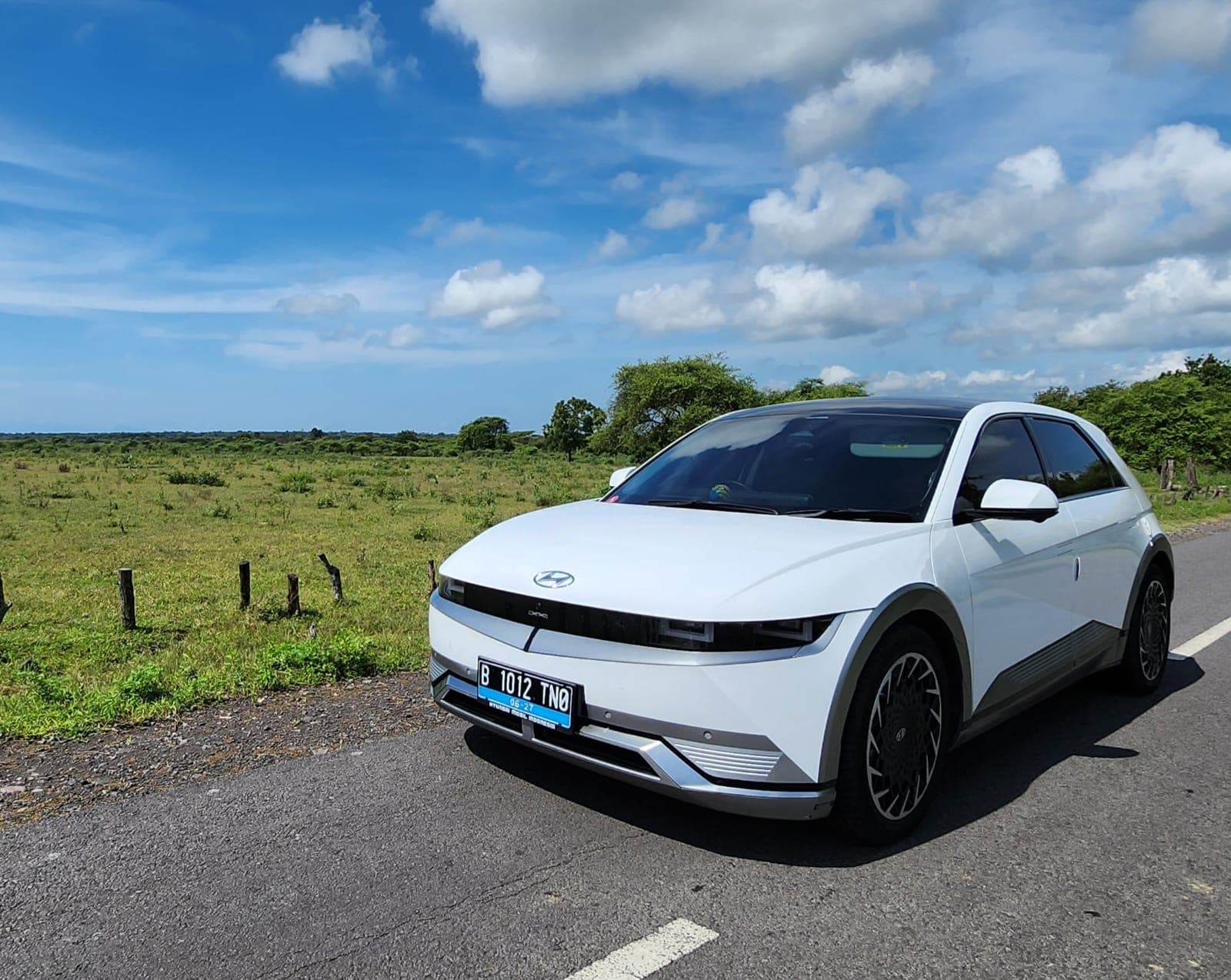
It's common knowledge in the automotive barge: electric cars (EVs) are often sneered at as "expensive and timid toys". The charges are uniform, namely range anxiety or anxiety about mileage. In Indonesia, 300 kilometers is considered a shameful, sacred number. How can a vehicle worth hundreds of millions be less magical than an old gasoline car that can hit 600 kilometers in one pee? However, let's dissect with a cool head. Is it really a bad EV, or is our ego just too big?
Robot or Human Driver?
We often get caught up in the romanticism of "Jakarta-Surabaya in one sitting". A pseudo-pride that ignores one crucial variable: the body's biology. We treat mobility like a sprint, even though the highway is a deadly public space for the arrogant.
The National Committee for Transportation Safety (KNKT) has repeatedly emphasized that fatigue is non-negotiable. In the report cited by Detik.com (https://oto.detik.com/berita/d-6490606/knkt-60-persen-kecelakaan-di-jalan-tol-disebabkan-kelelahan), the KNKT revealed the terrible fact that 60 percent of fatal accidents on toll roads are caused by driver fatigue. KNKT Chairman Soerjanto Tjahjono also reminded readers via Kompas.com (https://otomotif.kompas.com/read/2023/04/18/101200515/ingat-obat-lelah-saat-mengemudi-cuma-tidur-bukan-kopi) that the only cure for fatigue is sleep, not coffee, because forcing oneself to drive is an act of "planned suicide".
The Limit of Sanity on Asphalt
International institutions such as the World Health Organization (WHO) also give similar warnings. As reported by CNN Indonesia (https://www.cnnindonesia.com/otomotif/20211105150836-337-717148/bahaya-nyata-menyetir-saat-mengantuk-setara-mabuk-alkohol), a person awake for 17 hours has a sharp decline in driving performance, equivalent to a blood alcohol level of 0.05 percent.
In line with that, the United States road safety authority, NHTSA, in research reviewed by Kumparan (https://kumparan.com/kumparanhits/menyetir-saat-mengantuk-sama-bahayanya-dengan-mabuk-ini-penjelasan-riset-1wr7OOfE3yW), highlighted that drowsy drivers experience slower motor reactions and a reduced ability to make sound decisions. The danger is identical to driving under the influence of alcohol, a condition that often ends in a fatal collision without having time to brake on the asphalt.
This is where the 300-kilometer figure on an electric car becomes relevant. It is not as a technological limitation, but as a "safety anchor" that forces you to stop before your brain loses control.
A Saving Pause
In Indonesia, the law has actually fenced this behavior through Law No. 22 of 2009, Article 90, which requires drivers to rest for at least 30 minutes after 4 hours of driving, a rule that has been reminded again by Tempo.co (https://otomotif.tempo.co/read/1586522/aturan-waktu-istirahat-mengemudi-untuk-cegah-kecelakaan) to reduce the number of accidents. However, who cares about the rules if the gas tank is still full?
Electric cars "force" that compliance. The 20 to 40 minutes at SPKLU fast charging isn't just time to charge the battery; it's time for the brain to recover its cognitive function. When the car "gulps" electricity, you take a sip of coffee and straighten your waist. It's a fair trade-off: the car is powered again, and the driver is conscious again.
Cover: False Heroism on the Road
In the end, the debate about the mileage of electric cars reflects how we value life. We too often worship the speed of the engine while ignoring our own body's vulnerability. Boasting about driving dozens of hours non-stop is not a sign of toughness, but carelessness wrapped in false heroism.
So, are we still going to sneer at the 300-kilometer figure as a "shortcoming"? Or do we actually need an electric car to teach us to be human beings who know when to stop?
What do you think? Would you rather reach your destination 1 hour faster with the risk of extreme fatigue, or enjoy a trip with a "forced" break by the battery? Let's have a healthy debate in the comments section.